On this page
Start with the home you actually have
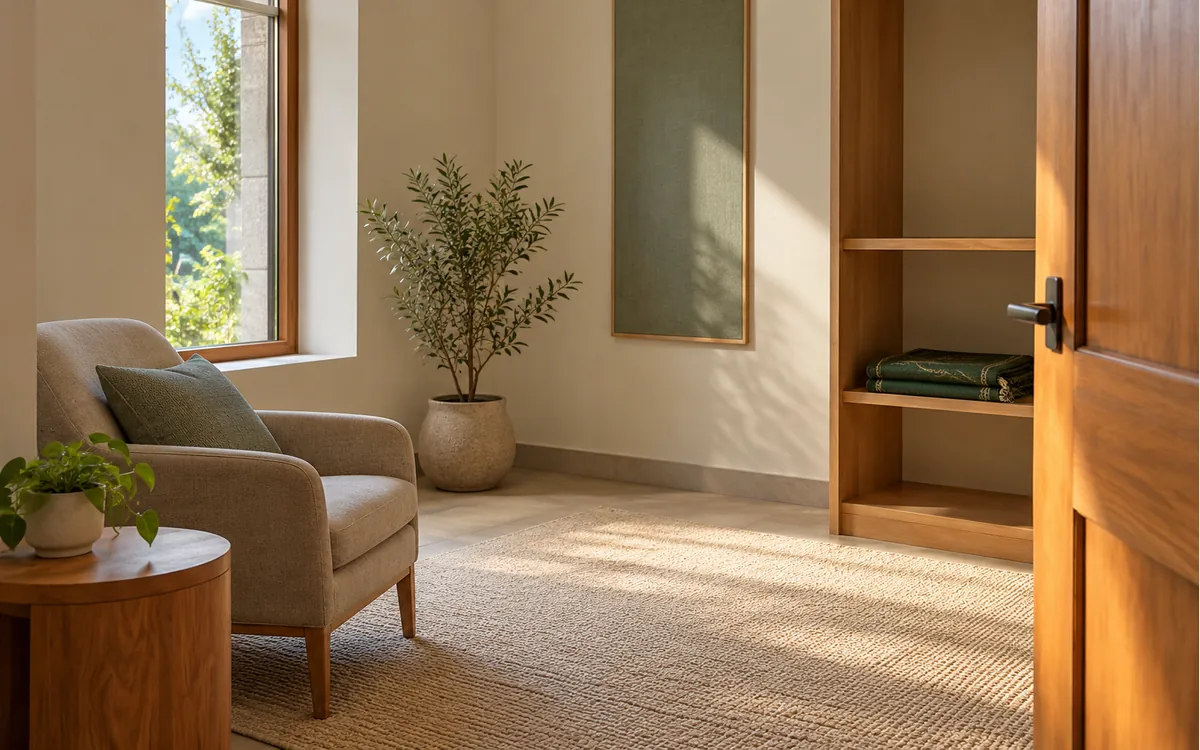
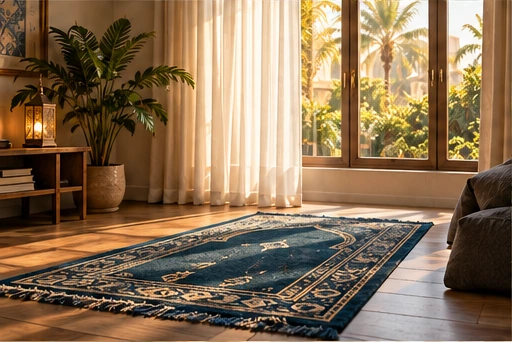
A calm prayer space does not have to be a separate room. It may be a corner that is available at certain times, a small area beside a bookcase or part of a shared room that can be cleared easily. Begin with how the space will be used rather than how it will look in a photograph.
Walk through the practical steps: reaching the area, preparing it, using it and putting things away. If furniture needs to move every time, make that movement straightforward. A simple arrangement that is easy to maintain can serve a home better than an elaborate one that is rarely usable.
Check direction and access first
Before fixing a layout, establish the direction you intend to face. AL-Naqawa’s Qibla tool calculates a bearing from the selected city towards the Kaaba, measured from true north. It is a directional reference, not a live sensor compass that knows how your phone is being held.
Keep the area approachable and avoid creating an awkward route across cables, bags or furniture. Consider the needs of everyone who may use it, including a person who uses a chair or needs a clear approach. For specific questions about your circumstances, seek appropriate local guidance.
- Choose a position that can remain clear when needed.
- Keep a rug and any personal items within easy reach.
- Avoid placing a device cable where someone will step.
- Check the layout at the time of day you will actually use it.
Make light and distractions easy to manage
Notice glare from windows, direct light from a screen and background movement. A display that is comfortable in daylight may feel too bright in a quiet evening room. Adjust the device itself as needed; the website’s day and night button changes its visual theme, not the physical brightness of your screen.
Keep decoration secondary to clarity. If you use a timetable, place it where the city, month and numbers can be read comfortably. Avoid a wall of tiny text or multiple schedules that disagree without explanation. One clearly labelled reference is easier to understand.